Guests and groomsmen can both wear a navy blue wedding suit, but they have different decisions to make. A guest should follow the invitation and choose an outfit suited to the celebration. A groomsman also needs to follow the couple’s plan for colour, fit and accessories.
Navy is a useful option because you can adjust its formality without relying on a completely different colour. A plain two-piece suit can suit a simple daytime ceremony, while a coordinated three-piece outfit can work for a more formal wedding party. The invitation and the couple’s instructions should guide the choice.
Read What the Invitation Actually Asks For
Check the stated dress code before shopping. If the invitation says black tie, the usual expectation is a dinner suit. A conventional navy lounge suit with a bow tie is a different outfit. If the wording is unclear, ask the hosts in time to make a sensible decision.
For a wedding where ordinary suits are welcome, look at the setting and time of day. A city ceremony and evening reception may call for a darker, cleaner finish. A relaxed daytime wedding can leave more room for texture, a softer shirt colour or less formal footwear.
As a guest, avoid treating the wedding theme as an instruction to buy an exact matching outfit. You can acknowledge a country setting with a textured cloth without trying to replicate the wedding party. Keep your own outfit coherent and let the couple decide how closely their attendants should coordinate.
Guests Can Choose for Wear Beyond the Wedding
If you are buying a suit for one invitation, think about where you could wear it afterwards. A plain navy design can be adapted for dinners and other occasions by changing the shirt and accessories. A pronounced check is more distinctive, which may suit someone who already owns simpler tailoring.
TruClothing’s Navy blue wedding suit collection includes plain, herringbone and checked styles. For guests, comparing those finishes is a useful way to decide how much detail the occasion needs. Check the full product description as well as the colour, especially if warmth or fabric weight affects your choice.
A waistcoat is optional unless the dress code says otherwise. Choose one if you like the complete three-piece look or want the outfit to remain smart when you remove the jacket. A well-fitting two-piece suit is also appropriate at many weddings, so there is no need to add another layer purely to compete with the groom.
Groomsmen Need a Shared Reference
If you are dressing as part of the wedding party, confirm the exact suit before placing an order. Ask for the maker, model and colour rather than a broad instruction such as dark navy. Two suits can look close separately and noticeably different when the group stands together.
Clarify what needs to match. The couple may want identical suits with individual shoe choices, or coordinated navy outfits with matching ties. Agree on the plan for waistcoats and shirts too. A white shirt in one fabric can look warmer or cooler than another beside it.
Arrange fittings early enough for each person to choose the correct size and allow for alterations. Matching does not mean everyone needs the same cut or trouser length. A coordinated wedding party looks more comfortable when each outfit fits the person wearing it.
Use Accessories According to Your Role
Guests usually have more freedom with ties and pocket squares. A small pattern can suit a plain navy jacket, while a checked suit often looks clearer with a quieter tie. Avoid adding several unrelated colours simply because navy can accommodate them.
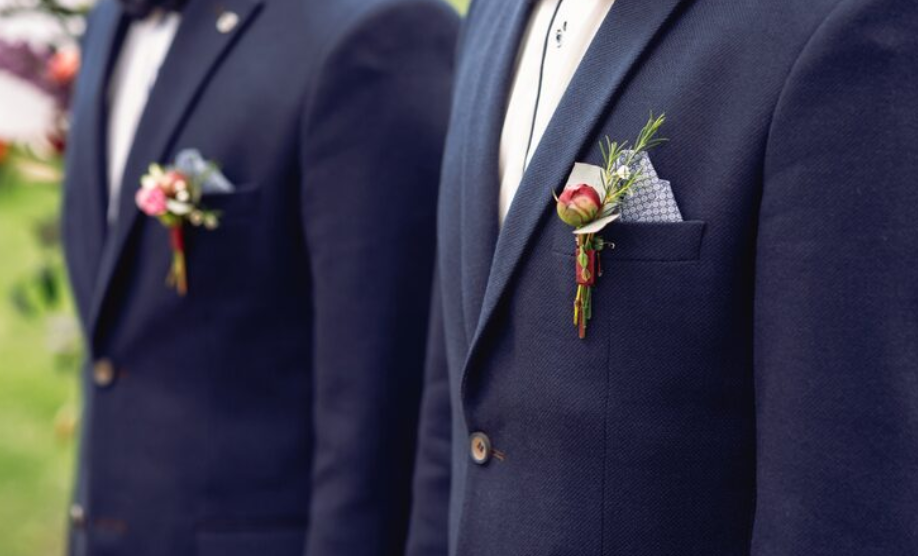
Groomsmen should use the agreed accessories, even if they would choose something else for their own wardrobe. Confirm whether ties are being supplied and whether the buttonholes will arrive on the day. This prevents last-minute purchases that are almost, but not quite, the right shade.
Shoe colour is another detail to settle. A group wearing a mixture of pale tan, dark brown and black footwear will have a different effect from a coordinated set. Either approach can be intentional, but the decision belongs with the couple if they are planning the wedding-party outfits.
Prepare For the Venue and the Journey
For outdoor photographs, find out how far you will walk and what the ground is like. Choose dress shoes that suit the setting and keep a way to remove surface dirt afterwards. A wedding suit does not need to dictate uncomfortable footwear for an entire day.
During colder months, try an overcoat above the suit rather than assuming your usual coat will fit. In warmer conditions, consider cloth weight and lining when selecting the outfit. Colour alone does not tell you how comfortable a suit will feel through a long afternoon.
If travelling, use a suitable garment bag and hang the suit on arrival. Follow the care label for any pressing or steaming. Leave time to get dressed without rushing, especially if several groomsmen are sharing one room and one mirror.
Check The Outfit Before Packing It
Lay out the suit with the intended shirt, socks and shoes. Add cufflinks if the shirt requires them and check that the tie is the agreed one. A simple list is useful for overnight stays, when a missing accessory may be difficult to replace.
For groomsmen, a quick group check before the ceremony can catch an uneven tie or an overlooked label. For guests, the same check can happen before leaving home. Once the clothing decisions are settled, you can focus on the celebration rather than adjusting the outfit all day.