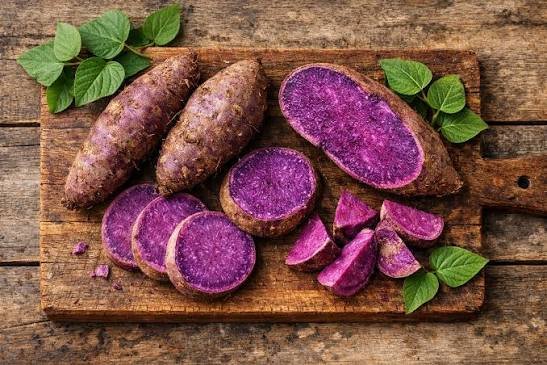
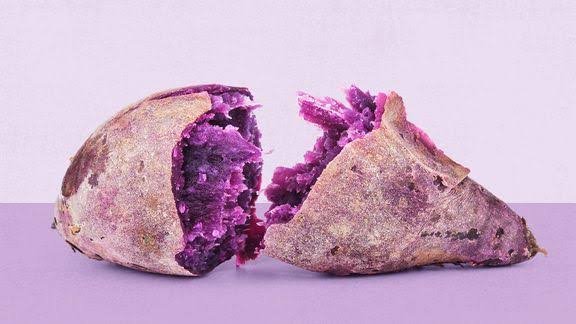
Organic ube and purple sweet potato may look strikingly similar once cooked, yet they are not the same food. Both have richly colored flesh, contain carbohydrates and fiber, and can bring a naturally vibrant purple tone to recipes. Their botanical origins, flavor, texture and traditional uses, however, are quite different.
Ube is a variety of purple yam, most closely associated with the Philippines and other parts of Southeast Asia. Purple sweet potatoes belong to the sweet potato family and are cultivated in several regions around the world. Put them side by side and their differences become easier to recognize. Ube usually offers a sweeter, more aromatic character, while purple sweet potato tends to taste earthier and more familiar.
For people exploring colorful whole foods, choosing organic ube can also introduce a distinctive ingredient that goes far beyond appearance. Its deep violet flesh acts almost like nature’s food coloring, but its culinary appeal comes mainly from its creamy texture and subtly nutty, vanilla like flavor. Purple sweet potato, by contrast, behaves more like a conventional root vegetable and often works better in savory dishes.
The nutritional profiles overlap in several ways. Both can contribute complex carbohydrates, fiber, potassium and naturally occurring plant pigments. Yet variety, growing conditions and preparation methods influence the exact amounts of nutrients they provide. Understanding these differences makes it easier to decide which tuber fits a recipe or eating pattern.
Ube and purple sweet potato come from different plants
The clearest difference is botanical. Ube, scientifically known as Dioscorea alata, belongs to the yam family. Purple sweet potato belongs to the species Ipomoea batatas, the same broad species that includes orange, white and other sweet potato varieties.
This distinction matters because yams and sweet potatoes develop differently. Ube is a true yam with a rougher exterior and dense flesh. Purple sweet potato generally has smoother skin and the elongated shape commonly associated with sweet potatoes. Their growing habits also differ, since yams develop from climbing vines while sweet potatoes grow from spreading vines close to the ground.
Ube has a particularly strong cultural connection with Filipino cuisine. It appears in cakes, ice creams, pastries, jams and festive desserts. Purple sweet potatoes have a broader range of culinary traditions and are commonly roasted, steamed, mashed or added to both sweet and savory meals.
The two ingredients may occasionally be substituted for one another, but the result will not be identical. Their moisture levels, starch structure and aroma can affect everything from cake texture to the consistency of a filling.
What do ube and purple sweet potato taste like?
Flavor is where many people notice the biggest difference. Ube has a distinct sweetness with notes often described as nutty, mildly vanilla like and slightly floral. The taste is gentle rather than intensely sugary, which explains why it combines so well with coconut milk, dairy, condensed milk and baked goods.
Purple sweet potato has a more straightforward root vegetable flavor. Depending on the variety, it can be mildly sweet, earthy and slightly dry. Some varieties become sweeter during roasting as their natural starches break down into simpler sugars.
The characteristic flavor of ube
Fresh cooked ube has a flavor that is difficult to reproduce with another tuber. Its sweetness is subtle, and the characteristic aroma becomes more noticeable when it is combined with fat or creamy ingredients. This is one reason ube works particularly well in traditional preparations such as mashed sweetened yam, ice cream and cakes.
Commercial ube products can taste much stronger because they may contain added sugar, flavorings or concentrated extracts. When evaluating natural ube flavor, fresh or minimally processed products give a more accurate impression.
The more familiar taste of purple sweet potato
Purple sweet potato resembles other sweet potatoes more closely. Roasting intensifies its natural sweetness and can create slightly caramelized edges, while steaming preserves a milder flavor and softer texture.
This versatility makes purple sweet potato suitable for soups, grain bowls, purees, vegetable dishes and baked recipes. It does not usually provide the same distinctive dessert aroma as ube, even when its color appears almost identical.
Texture and cooking behavior are noticeably different
Texture can strongly influence which ingredient is better for a particular recipe. Cooked ube often becomes smooth, dense and creamy when mashed correctly. Depending on the variety and preparation, it may also have a slightly fibrous structure typical of certain yams.
Purple sweet potato tends to be starchier. Some varieties are moist, while others have a relatively dry and floury texture. When baked, the flesh can remain firm enough to hold its shape, making it practical for salads, bowls and roasted vegetable dishes.
Ube is especially useful when a recipe needs a rich puree or filling. Purple sweet potato performs well when structure matters. Trying to replace one with the other in a cake or pastry can change the amount of liquid needed because their water and starch content are not necessarily equal.
Cooking also changes their color. Heat may deepen or soften the purple tone depending on acidity, variety and preparation method. The vivid color does not automatically indicate a higher nutrient concentration, although it is associated with naturally occurring plant pigments.
Nutritionally, both can fit a balanced diet
From a nutrition perspective, neither ingredient needs to be treated as a miracle food. Both are primarily starchy carbohydrate foods that can provide energy while contributing fiber, minerals and protective plant compounds.
Ube naturally contains carbohydrates and some dietary fiber, along with nutrients such as potassium. Purple sweet potatoes provide a similar foundation. Exact values vary considerably according to cultivar, maturity, soil conditions and cooking method, so comparisons based on a single nutrition table can be misleading.
The deep purple color found in both foods is linked to anthocyanins, a family of pigments also present in blueberries, blackberries and red cabbage. These compounds are studied for their antioxidant properties. Eating anthocyanin rich foods can be one useful part of a varied diet, but the broader eating pattern remains more important than any single ingredient.
Preparation makes a major nutritional difference. Plain steamed ube and an ube dessert made with large amounts of sugar and condensed milk are nutritionally very different foods. The same applies to purple sweet potato. Roasted or steamed versions generally provide the tuber’s nutrients without the additional sugar or saturated fat that may appear in desserts.
- complex carbohydrates
- dietary fiber
- potassium
- anthocyanin pigments
- small amounts of several micronutrients
Is organic ube healthier than purple sweet potato?
Neither food is automatically healthier in every situation. Their usefulness depends on portion size, preparation and the rest of the meal. An organic ube puree served without excessive added sugar can fit comfortably into a balanced diet, just as a roasted purple sweet potato can.
The term organic relates mainly to the agricultural production method. It does not transform ube into a fundamentally different nutritional food. Organic production can matter to consumers who prefer certain farming practices, but the major nutritional characteristics still come from the tuber itself.
If blood glucose management is a concern, portion size and preparation deserve attention because both foods contain substantial amounts of starch. Pairing them with protein, vegetables, healthy fats or other fiber rich foods can create a more balanced meal and may influence how quickly carbohydrates are digested.
People trying to improve overall diet quality should focus less on choosing a nutritional winner and more on how the ingredient is eaten. Minimally processed purple tubers can be valuable foods, while highly sweetened products should remain occasional choices regardless of whether they contain ube or purple sweet potato.
Ube is often better for desserts, while purple sweet potato is more versatile
The traditional culinary strengths of ube are closely connected with desserts. Its natural aroma complements coconut, vanilla, milk and baked flavors particularly well. Ube can be mashed, turned into a puree or incorporated into batters and creamy fillings.
Purple sweet potato works comfortably on both sides of the menu. It can be roasted with vegetables, mashed as a side dish, added to soups or used in baked goods. Its mild earthy sweetness makes it easier to pair with savory seasonings.
For everyday use, preparation can remain simple. Ube can be steamed or boiled until fully tender before being peeled and mashed. Purple sweet potato can be roasted whole or cut into pieces. Both can be incorporated into meals without relying on heavily processed powders or sweetened pastes.
Powders are convenient, but they need to be checked carefully. A product labeled ube powder may contain dehydrated purple yam, while another may include sugar, coloring or flavorings. Reading the ingredient list is the most reliable way to identify a pure ube product.
How can you tell ube from purple sweet potato?
Fresh ube usually has rough, bark like skin that resembles the exterior of other yams. Its shape can be irregular, cylindrical or elongated. Purple sweet potatoes generally have thinner, smoother skin and a more recognizable sweet potato shape.
Once cut open, both may display violet flesh, but color alone is not a reliable identification method. Some purple sweet potatoes are extremely dark, while certain ube varieties are lighter. Flavor and texture provide additional clues.
Ube typically becomes creamy when cooked and develops its recognizable sweet aromatic profile. Purple sweet potato often remains slightly denser or drier and tastes more earthy. Processed products are much harder to distinguish visually because purees, powders and desserts can contain added ingredients.
When purchasing packaged foods, the ingredient list is therefore essential. Look for wording such as purple yam or Dioscorea alata when seeking real ube. Products listing purple sweet potato or Ipomoea batatas contain a different tuber, even if the finished product looks almost identical.
The right choice depends on what you want to cook
If the goal is a traditional Filipino inspired dessert, ube is usually the more authentic choice. Its aroma, texture and natural sweetness create a result that purple sweet potato cannot fully reproduce. It works especially well in creamy desserts, baked fillings, cakes and sweet spreads.
If you want a colorful root vegetable for everyday meals, purple sweet potato may be easier to use. It can move naturally between savory and sweet recipes and requires little adjustment to familiar cooking methods.
From a health perspective, both can contribute useful nutrients when eaten in sensible portions and prepared with relatively simple ingredients. Their strongest shared qualities are their fiber containing starch, potassium and anthocyanin pigments rather than their striking color alone.
The simplest distinction is therefore practical: ube is a purple yam with a distinctive dessert friendly flavor, while purple sweet potato is a separate root crop with an earthier taste and broader savory potential. They may share a color palette, but in the kitchen and botanically, they remain two clearly different foods.