If you have searched for best piononos de Santa Fe near me, you are probably looking for more than an ordinary sponge cake. The Pionono de Santa Fe is a distinctive Spanish pastry closely associated with Santa Fe, a town in Granada, Andalusia. It combines a delicate rolled sponge, sweet syrup and a creamy topping that is traditionally browned on the surface. The result is small, soft, moist and intensely sweet, with a texture that makes it very different from many other cakes and pastry rolls.
The phrase can be slightly confusing because “pionono” is also used for several different desserts around the world. Argentina and other Latin American countries have their own versions, while the Spanish Pionono de Santa Fe has a particular shape, preparation and historical connection with Granada. For someone trying to find the authentic version locally, understanding that distinction is one of the most useful steps.
Quick Bio: Pionono de Santa Fe
| Detail | Information |
|---|---|
| Name | Pionono de Santa Fe |
| Type | Traditional Spanish pastry |
| Region | Santa Fe, Granada, Andalusia, Spain |
| Famous association | Granada’s traditional confectionery |
| Main components | Sponge cake, syrup and cream |
| Characteristic finish | Toasted cream |
| Historical figure associated with its creation | Ceferino Isla |
| Traditional period | Late 19th century |
| Name inspiration | Pope Pius IX, or Pío Nono |
| Best known for | Small cylindrical shape and toasted topping |
What Is a Pionono de Santa Fe?
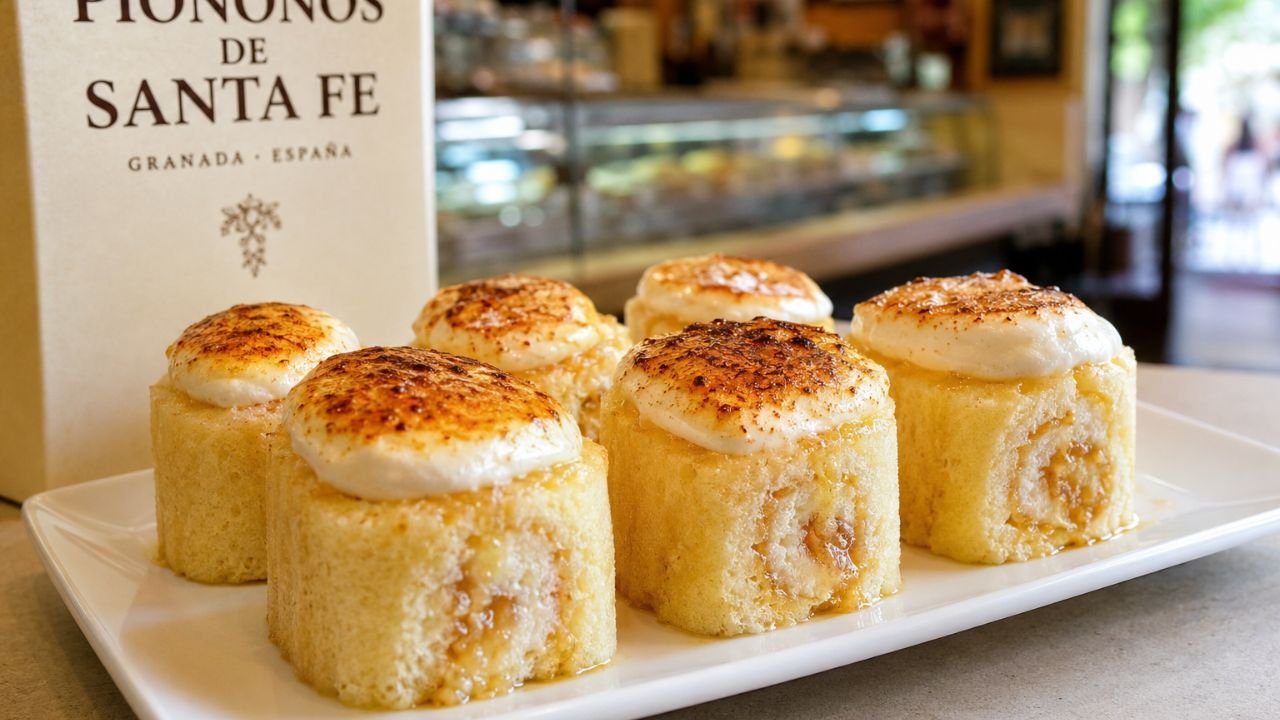
A traditional Pionono de Santa Fe is a small pastry made from a thin sheet of sponge cake that is rolled into a compact cylinder. The cake is moistened with syrup and combined with a creamy filling or topping. Its most recognizable feature is the toasted cream placed on top.
The culinary identity of the pastry is strongly connected to Santa Fe in Granada. A Granada gastronomic guide describes piononos as small pastries traditionally found throughout the area’s pastry shops and identifies them as one of Santa Fe’s important gastronomic specialties. The guide also notes that recipes can vary between pastry makers, with some modern versions incorporating ingredients such as chocolate, fruit, dulce de leche or meringue.
This is important when searching locally. A bakery may advertise a “pionono” that is actually a different style of rolled cake. If authenticity matters, look for references specifically connecting the pastry to Santa Fe, Granada rather than assuming every dessert carrying the same name is identical.
Why Is the Pionono Associated With Santa Fe?
The history of this pastry is one of the reasons it has become such an important part of Granada’s food culture.
The name is generally connected with Pope Pius IX, whose name was rendered as “Pío Nono.” The pastry’s distinctive cylindrical form and toasted crown have traditionally been interpreted as a visual reference to the pope’s headwear. Sources differ on some details of the pastry’s earliest history, but Ceferino Isla is widely associated with the development and popularization of the Santa Fe version.
Casa Ysla, the historic pastry business associated with the dessert, traces its Pionono tradition to 1897. Other historical references indicate that the name and pastry have a more complicated history, with references to similar sweets appearing before that date. For an accurate article, it is therefore better to describe 1897 as the date associated with Ceferino Isla and Casa Ysla rather than claiming without qualification that no similar form existed earlier.
The broader historical record also shows that the name “pionono” appeared in Spanish sources before the late 19th century. This makes the story more interesting rather than less significant: today’s famous Santa Fe pastry developed within a longer Spanish confectionery tradition.
What Makes the Traditional Pionono Different?
The biggest difference is its combination of soft sponge, syrup and toasted cream.
The sponge is thin rather than thick. Once rolled, it forms a compact base that can absorb syrup without becoming completely soggy. The sweetness is therefore distributed throughout the pastry rather than concentrated only in the topping.
The toasted cream provides another layer of contrast. Its lightly browned surface creates a subtle caramelized character against the soft interior. This combination of textures is one reason the pastry is often served in small individual portions.
A technical product description from another Granada confectionery describes the pastry as a small cake traditionally made in Santa Fe, consisting of rolled sponge and toasted cream. It also identifies ingredients including eggs, sugar, wheat flour, milk, butter and egg-based cream.
How to Find the Best Piononos de Santa Fe Near Me
When looking for the best option in your area, the first step is to search beyond the exact phrase “piononos de Santa Fe.” Try related searches such as authentic Pionono de Santa Fe, Spanish bakery near me, Granada-style pastries near me, or Santa Fe Granada pionono.
The next step is to check whether the bakery actually identifies its product as the Spanish variety. A listing that simply says “pionono” may refer to a Latin American sponge roll, Filipino pianono or another regional interpretation.
Photos can also provide useful clues. A traditional Santa Fe-style pastry is generally small and cylindrical, with a visible spiral or rolled sponge and a distinctive toasted cream crown. A large jelly roll or Swiss-roll-style cake is not necessarily the same thing.
For the strongest authenticity signal, look for a bakery or pastry maker with a documented connection to Granada or Spanish confectionery traditions. Historic producers in Santa Fe have helped establish the pastry’s reputation, while other Granada bakeries have developed their own interpretations.
Casa Ysla and the Historic Santa Fe Tradition
Casa Ysla is particularly important when researching authentic Piononos because its history is closely tied to the pastry’s modern identity. The business traces its Pionono tradition to 1897 and continues to associate its confectionery with Santa Fe and Granada.
The pastry has become sufficiently important to the region that it appears in Granada’s gastronomic tourism material. A regional gastronomic guide describes Piononos as a local specialty and emphasizes that they are widely available in pastry shops around Granada.
Recent Spanish food coverage has likewise described the Pionono as an emblematic Granada sweet and highlighted the continued production of the pastry by traditional businesses.
That combination of history and continued production makes the pastry more than just another dessert. It is part of the culinary identity of Santa Fe and Granada.
Traditional vs. Modern Pionono Flavors
Not every good Pionono has to be completely traditional.
Granada’s pastry culture has produced numerous variations while retaining the basic idea of the original dessert. Some versions introduce chocolate, fruit, dulce de leche or other fillings. The Granada gastronomic guide specifically notes that individual pastry makers sometimes adapt the recipe and create different interpretations.
For a first tasting, however, the traditional version is the best place to begin. It lets you experience the combination that made the pastry famous: soft sponge, syrup and toasted cream.
After trying the classic version, flavored alternatives can be interesting for people who prefer less traditional desserts or want something different for a celebration.
What Should You Look For When Buying One?
Freshness is particularly important with a pastry containing syrup and cream. A good Pionono should feel soft and moist without being excessively wet or collapsed.
The sponge should retain enough structure to hold its shape. The cream should taste fresh rather than overwhelmingly artificial, and the toasted surface should provide a light caramelized flavor instead of a strongly burnt taste.
Presentation can also tell you something. Because the traditional pastry is small, inconsistent shaping or excessive dryness can become noticeable. If a bakery prepares them regularly, the individual pieces should generally have a consistent appearance.
If you are buying several, ask how they are stored and how soon they should be eaten. Some commercial versions are specifically sold refrigerated, while frozen products may have substantially longer storage periods. A product catalog from Rey Fernando, for example, lists refrigerated and ultrafrozen versions with different storage conditions.
Are All Piononos the Same?
No. This is probably the most important point for anyone researching the phrase “best piononos de Santa Fe near me.”
The word pionono is used internationally. Spanish Piononos from Santa Fe are different from several Latin American versions, and Filipino “pianono” is another distinct preparation. Even within Spain, pastry makers can introduce their own variations.
The Spanish version is especially recognizable because of its small cylindrical shape, syrup-moistened sponge and toasted cream crown. A general “pionono” search can therefore produce results that are technically relevant to the word but not relevant to someone specifically seeking the Santa Fe pastry.
Piononos as Part of Granada’s Food Culture
Piononos are closely connected with the wider gastronomic identity of Granada. The city and surrounding province are known for traditional Andalusian foods, and Santa Fe’s pastry has become one of the area’s recognizable sweet specialties.
For visitors, trying a Pionono can be an easy way to experience a piece of local food history without needing a full restaurant meal. The small serving size also makes it suitable for pairing with coffee or enjoying as an afternoon sweet.
The pastry’s popularity has encouraged producers to expand beyond individual pieces into cakes, frozen products and other desserts inspired by the same flavor profile. This shows how a regional specialty can evolve while retaining its recognizable identity.
Best Piononos de Santa Fe Near Me: What the Search Really Means
If your goal is to find the best piononos de Santa Fe near me, do not judge a bakery solely by whether it appears first in search results. Instead, consider authenticity, freshness, preparation, ingredient quality, customer feedback and whether the business clearly understands the Granada tradition.
Search results can change depending on location, opening hours and available listings. A nearby bakery may offer a good pastry but not the authentic Spanish style. Conversely, a specialist farther away may offer a much closer interpretation of the traditional Santa Fe product.
For that reason, the “best” choice depends partly on what you value. If authenticity is the priority, choose a producer with a clear Granada or Santa Fe connection. If convenience matters most, look for a Spanish bakery that confirms it prepares the traditional style. If you are interested in experimentation, modern chocolate or fruit variations may be worth trying after the classic version.
Final Thoughts
The search for best piononos de Santa Fe near me is ultimately a search for a very specific piece of Spanish pastry culture. The authentic Pionono de Santa Fe is associated with Santa Fe in Granada and is distinguished by its delicate rolled sponge, syrup, creamy filling and toasted topping. Its history, regional identity and continued popularity have helped make it one of Granada’s best-known traditional sweets.
For readers who want the genuine experience, the safest approach is to identify the pastry’s origin first and then evaluate local sellers against that standard. Rather than relying only on the word “pionono,” check the preparation style, appearance, ingredients, freshness and connection to Spanish or Granadian pastry traditions.
At News Sora, our goal is to make local and food-related searches more useful by explaining what readers should actually look for rather than simply repeating search results. When a food has multiple regional versions, understanding the difference can save readers from choosing something that shares the same name but does not match what they originally wanted.