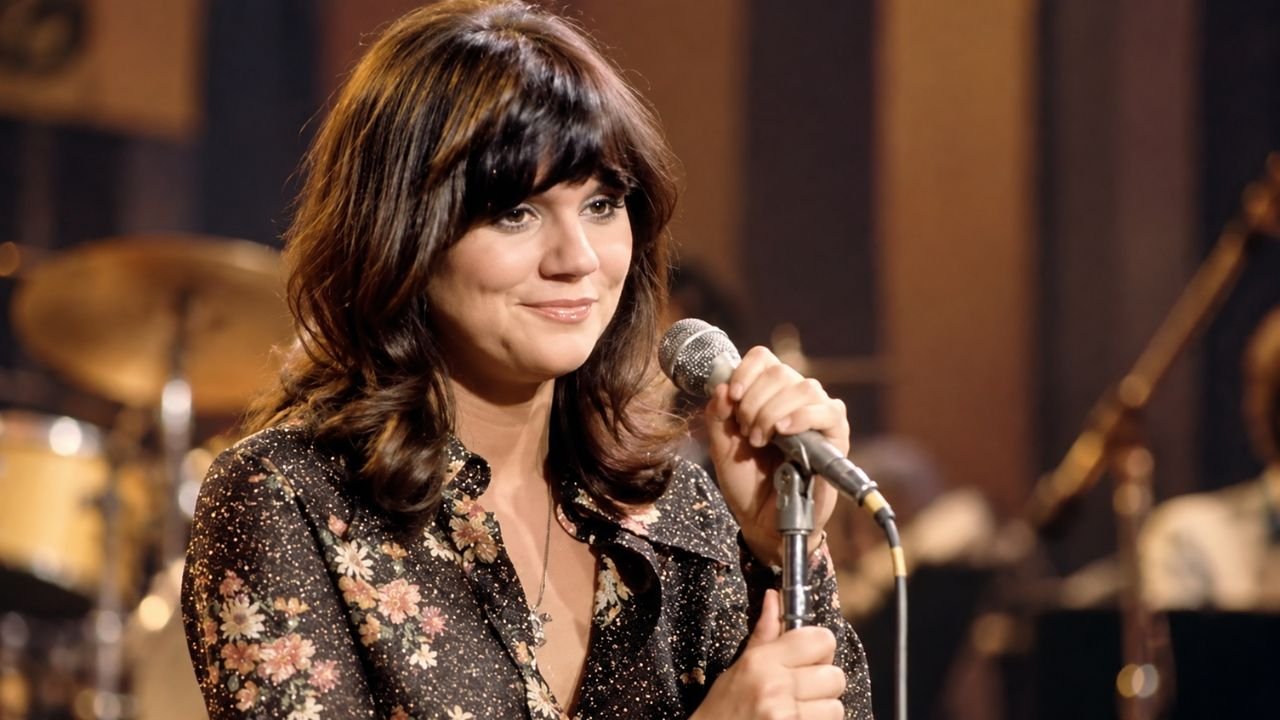
Linda Ronstadt is one of the most versatile American singers of the modern music era. Born on July 15, 1946, in Tucson, Arizona, she built a career that moved across rock, country-rock, folk, pop, country, traditional Mexican music, jazz and musical theater. Her voice became particularly associated with the Southern California rock scene of the 1970s, but her career was never limited to one genre. From her early work with The Stone Poneys to major solo albums, Spanish-language recordings and collaborations with artists such as Aaron Neville, Dolly Parton and Emmylou Harris, Ronstadt repeatedly changed musical direction while maintaining a distinctive vocal identity.
Quick Bio: Linda Ronstadt
| Detail | Information |
|---|---|
| Full name | Linda Maria Ronstadt |
| Born | July 15, 1946 |
| Birthplace | Tucson, Arizona, United States |
| Main genres | Rock, country-rock, folk-rock, pop, country, Mexican music, jazz |
| Early group | The Stone Poneys |
| Other musical associations | Swampwater, Free Creek |
| Father | Gilbert Ronstadt |
| Mother | Ruth Mary Copeman Ronstadt |
| Siblings | Peter Ronstadt, Gretchen “Suzy” Ronstadt, Michael J. Ronstadt |
| Children | Mary Clementine Ronstadt and Carlos Ronstadt |
| Famous songs | “Blue Bayou,” “You’re No Good,” “Long Long Time,” “Don’t Know Much” |
| Rock & Roll Hall of Fame | Inducted in 2014 |
| Grammy record | 11 wins and 27 nominations |
Early Life and Musical Family
Music was part of Linda Ronstadt’s life long before she became a recording star. She grew up in Tucson in a family where singing and musicianship were important parts of everyday life. Her father, Gilbert Ronstadt, was a singer and musician, while her mother, Ruth Mary Copeman Ronstadt, had a strong academic background.
Her family’s musical heritage also connected her to Mexican music and the cultural traditions of the American Southwest. Those influences later became central to her artistic identity. Rather than treating her Mexican heritage as something separate from her career, Ronstadt eventually incorporated traditional Mexican songs into some of her most significant recordings.
Her early exposure to different styles helped explain the remarkable range that later became a defining feature of her career. Rock was important, but it was only one part of a much larger musical vocabulary.
The Stone Poneys and the Beginning of Her Career
Ronstadt moved from Tucson to Los Angeles during the 1960s and became part of the emerging folk-rock scene. There she formed The Stone Poneys with Bobby Kimmel and Kenny Edwards.
The group recorded several songs and gained attention with “Different Drum,” a song written by Michael Nesmith. The success of the recording gave Ronstadt an early national platform and helped establish her as a singer capable of bringing emotional intensity to material written by other artists.
The Stone Poneys period was relatively short, but it was important because it introduced Ronstadt to the professional recording industry and the creative community that surrounded Los Angeles’ developing folk-rock and country-rock scene.
Swampwater, Free Creek and Her Musical Development
After The Stone Poneys, Ronstadt continued developing her sound through collaborations with musicians from the Southern California country-rock community. Swampwater became an important part of this period, serving as her backing group and helping reinforce the country and roots influences that would remain present throughout her career.
Free Creek represents another interesting part of her early recording history. It was a large collaborative recording project rather than a conventional long-running band. Ronstadt participated in the sessions, demonstrating how widely she was already working with musicians and producers outside a single fixed group.
These experiences helped prepare her for the solo career that followed. They also demonstrate why describing Ronstadt simply as a rock singer does not fully capture the musical journey behind her success.
Linda Ronstadt and Rock Music
During the 1970s, Ronstadt became one of the most recognizable female voices in American rock and country-rock. Her recordings combined powerful vocals with material drawn from rock, country, soul, folk and pop traditions.
Her association with rock became so strong that she was sometimes referred to as the “Queen of Rock” during her peak years. Yet Ronstadt herself explored many musical directions beyond that label. The Rock & Roll Hall of Fame later recognized her for a career that expanded from country and folk-rock roots into a remarkably broad range of styles.
Her success also helped demonstrate the commercial possibilities available to women performing prominently within the rock and country-rock landscape.
Linda Ronstadt Songs That Defined Her Career
The list of Linda Ronstadt songs includes recordings from several stages of her career. Some were written specifically for her, while many were interpretations of songs by other writers.
Among the best-known are “You’re No Good,” “Blue Bayou,” “Long Long Time,” “When Will I Be Loved,” “It’s So Easy,” “Ooh Baby Baby,” “Heat Wave” and “I Can’t Help It (If I’m Still in Love with You).”
This ability to reinterpret existing material became one of Ronstadt’s greatest strengths. She could take a song from another performer or songwriter and give it a distinctive emotional character without losing the identity of the original composition.
Linda Ronstadt – You’re No Good
“You’re No Good” became one of the defining recordings of Ronstadt’s commercial peak. Her version appeared on the album Heart Like a Wheel, released in 1974.
The recording became her first No. 1 single on the Billboard Hot 100, while Heart Like a Wheel also became a major album success. The combination of rock energy, country influence and soulful vocal delivery helped make the song one of her signature performances.
Its success also demonstrated Ronstadt’s ability to turn a song from outside her own songwriting catalogue into a defining part of her artistic identity.
Linda Ronstadt – Blue Bayou
“Blue Bayou” is another essential part of the Linda Ronstadt story. Her recording of the Roy Orbison and Joe Melson song became one of her most recognizable performances.
The song appeared on her 1977 album Simple Dreams and became a major chart success. It also earned Grammy nominations, including recognition in the Record of the Year and Best Pop Vocal Performance, Female categories.
The emotional quality of “Blue Bayou” illustrates why Ronstadt’s interpretations connected so strongly with listeners. Rather than relying solely on musical technique, she emphasized the longing and vulnerability within the song.
Linda Ronstadt – Long Long Time
“Long Long Time” belongs to the earlier part of Ronstadt’s solo career and remains one of the songs most closely associated with her voice.
The song appeared on her 1970 album Silk Purse and received a Grammy nomination. Decades later, renewed interest in the recording introduced it to another generation of listeners.
Its lasting appeal comes partly from Ronstadt’s restrained but deeply emotional vocal performance. The recording shows that her ability to communicate vulnerability existed well before her biggest commercial successes of the mid-1970s.
Linda Ronstadt and “Don’t Know Much”
Ronstadt’s collaboration with Aaron Neville produced another major milestone with “Don’t Know Much.”
The duet became a major pop success and won the Grammy for Best Pop Performance by a Duo or Group With Vocal. Their partnership worked because Ronstadt’s clear, expressive voice contrasted beautifully with Neville’s distinctive high tenor.
The recording remains one of the best-known collaborations in Linda Ronstadt’s catalogue and demonstrates her ability to move comfortably from rock and country into contemporary adult pop.
Linda Ronstadt Albums
Ronstadt’s album catalogue covers several distinct phases of her artistic development. Important releases include Hand Sown… Home Grown, Silk Purse, Don’t Cry Now, Heart Like a Wheel, Prisoner in Disguise, Hasten Down the Wind, Simple Dreams, Living in the USA and Mad Love.
Later projects moved further away from the rock sound for which she had become famous. What’s New introduced her to a new audience through classic pop standards arranged by Nelson Riddle. She subsequently explored traditional Mexican music through Canciones de Mi Padre and related Spanish-language recordings.
Her catalogue therefore tells a larger story than a conventional rock discography. It documents a singer continually testing the boundaries of her own voice.
Linda Ronstadt’s Mexican Music
One of the most important chapters in Ronstadt’s career came through her recordings of traditional Mexican music.
Canciones de Mi Padre, released in 1987, drew on songs connected to the musical traditions she had heard from her family while growing up in Arizona. The album became a major commercial and cultural achievement.
Her Spanish-language work also challenged assumptions about what a successful American rock singer was expected to record. Rather than treating these songs as a side project, Ronstadt approached the music as an important part of her personal and cultural background.
The success of these recordings helped introduce traditional Mexican music to many listeners who might not otherwise have encountered it.
Linda Ronstadt and the Eagles
Ronstadt’s career is also closely connected with the history of the Eagles. Several musicians who worked with her during her Southern California period, including Glenn Frey, Don Henley, Bernie Leadon and Randy Meisner, later became members of the Eagles.
This connection is an important part of the broader Southern California country-rock story. Ronstadt was not simply a successful performer within that scene; her musical circle included artists who went on to become major figures themselves.
Glenn Frey later inducted Ronstadt into the Rock & Roll Hall of Fame in 2014.
Linda Ronstadt Husband and Relationships
A frequently searched question is whether Linda Ronstadt has a husband. She has never married.
Ronstadt has spoken publicly about relationships and explained that marriage was not the path she wanted for herself. Her well-known relationships included California politician Jerry Brown and filmmaker George Lucas.
Her decision not to marry did not mean that family was unimportant to her. She later became a mother through adoption and kept much of her children’s early lives away from the public spotlight.
Linda Ronstadt Children
Linda Ronstadt has two adopted children, Mary Clementine Ronstadt and Carlos Ronstadt.
She intentionally protected them from the intense public attention associated with her career. In later interviews, she has discussed their interests and family life while continuing to maintain a degree of privacy around them.
Her role as a mother became an important part of her life after decades spent traveling, recording and performing around the world.
Linda Ronstadt Net Worth
“Linda Ronstadt net worth” is another popular search query, but an exact current figure should not be presented as an established fact unless it comes from a reliable financial disclosure.
Various entertainment websites publish estimated net-worth figures for famous musicians, but these estimates can differ substantially and generally do not provide enough evidence to verify a precise amount.
A more responsible way to discuss her finances is to focus on the documented commercial success of her recordings, tours, catalogue and awards rather than presenting an unsupported number as fact.
Is Linda Ronstadt Still Alive?
Yes, Linda Ronstadt is still alive. Born in 1946, she is 80 years old in 2026.
Her performing career ended after health problems affected her ability to sing. She has remained involved in cultural projects, interviews, archival releases and efforts connected with music and Mexican-American cultural traditions.
Although she no longer performs regularly, her recordings continue to attract listeners and introduce her work to new generations.
Linda Ronstadt Now
Today, Linda Ronstadt’s legacy extends well beyond her biggest chart singles. Her career demonstrates how an artist can move between musical traditions without being permanently defined by one category.
Her work continues to be represented through reissues, documentaries, books, interviews and retrospective projects. Her induction into the Rock & Roll Hall of Fame in 2014 and her numerous Grammy honors further recognize the breadth of her contribution.
Her story is especially notable because she did not remain in one musical lane. She moved from The Stone Poneys and the folk-rock scene into country-rock, mainstream pop, rock, traditional Mexican music, jazz standards, Broadway and collaborative projects.
Linda Ronstadt’s Lasting Legacy
Linda Ronstadt’s influence comes from both her voice and her willingness to explore unfamiliar musical territory. She became a major rock-era performer without limiting herself to rock, and her career repeatedly challenged the idea that a successful artist needed to maintain one recognizable sound.
From “Long Long Time” and “You’re No Good” to “Blue Bayou” and “Don’t Know Much,” her best-known recordings cover very different musical moods. Her albums also show a willingness to take creative risks, whether working with Nelson Riddle on traditional pop standards or returning to Mexican songs connected to her family.
For readers discovering her music today, Linda Ronstadt offers more than a collection of famous songs. Her catalogue provides a record of American popular music changing across several decades, while her own career demonstrates the possibilities of musical curiosity, collaboration and reinvention.
For News Sora, Linda Ronstadt’s story provides a valuable example of how a long-form celebrity music article can combine biography, songs, albums, family history, career milestones and cultural context without relying on repetitive keyword placement or unsupported claims.