
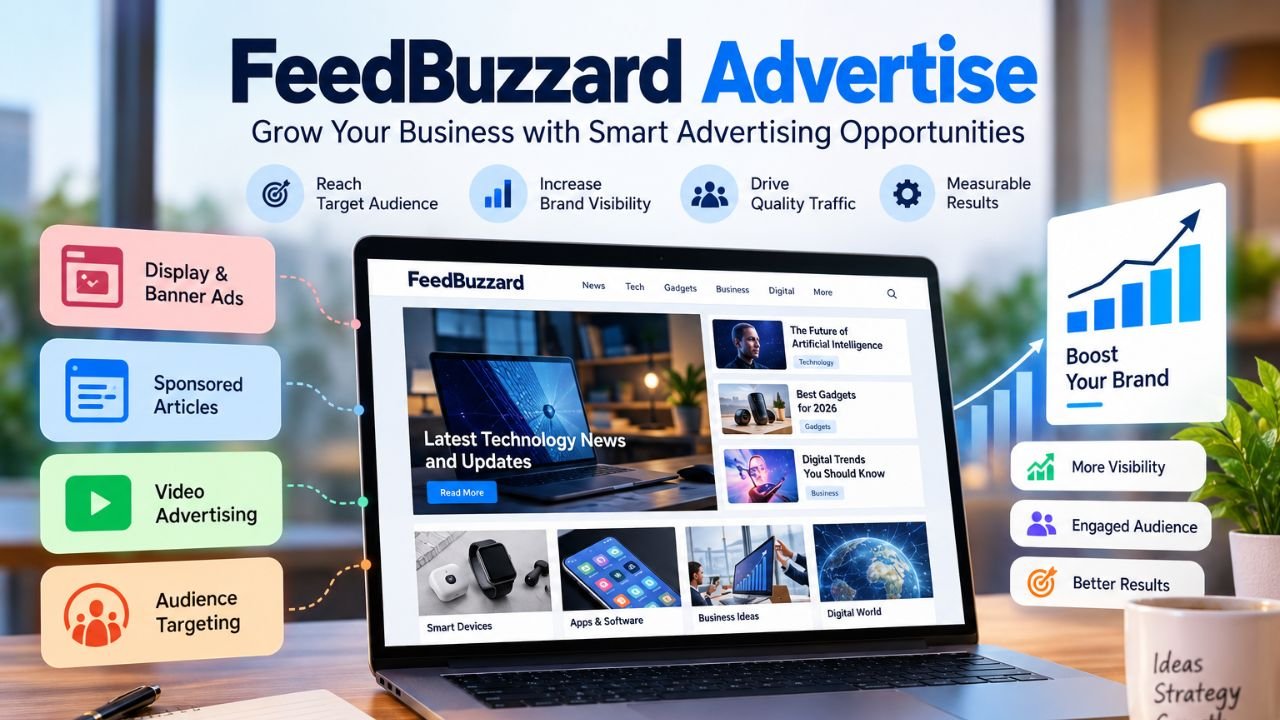
FeedBuzzard Advertise is a search term associated with advertising opportunities and promotional options discussed on the FeedBuzzard website. Businesses researching this topic may want to understand how advertising placements work, which formats are described, how campaigns can be evaluated, and what to check before investing in an unfamiliar advertising service. Understanding these details can help marketers make more informed decisions without relying on exaggerated claims or unverified performance figures.
Advertising online has become an important part of business promotion, but choosing a platform requires more than looking at its name or advertised features. Companies need to consider audience relevance, campaign costs, transparency, and measurable results. This guide explores FeedBuzzard advertising, explains the main concepts associated with it, and highlights practical steps businesses can take before launching a campaign.
Quick Facts About FeedBuzzard Advertise
| Detail | Information |
|---|---|
| Name | FeedBuzzard Advertise |
| Associated website | FeedBuzzard.com |
| Main topic | Online advertising and promotion |
| Potential users | Businesses, marketers, and advertisers |
| Advertising concepts | Sponsored content, display ads, and campaign measurement |
| Pricing information | Current rates require direct verification |
| Audience statistics | Independently verified figures were not established in the research reviewed |
| Main consideration | Confirm available services and terms before committing a budget |
What Is FeedBuzzard Advertise?
FeedBuzzard Advertise refers to advertising-related information associated with FeedBuzzard. Its published advertising guide discusses campaign planning, advertising formats, targeting, budgets, and performance measurement. These are familiar components of digital marketing, where businesses pay to present products, services, or messages to a relevant audience.
However, it is important to distinguish an advertising guide from a fully verified advertising network. A website may offer sponsored placements directly, provide campaign-management facilities, or describe advertising methods without making every feature available to the public. Advertisers should therefore establish whether FeedBuzzard operates through direct publisher arrangements, a self-service campaign dashboard, or another purchasing process.
Understanding this distinction helps businesses avoid confusion about how advertisements are booked, delivered, and measured. Before making a payment, prospective advertisers should confirm the available services, the publisher’s responsibilities, and the reporting they will receive.
How Does FeedBuzzard Advertising Work?
A digital advertising campaign generally begins with a clear objective. A company might want to increase brand awareness, introduce a product, attract visitors to its website, or generate enquiries from potential customers. The objective determines which advertising format and performance indicators make sense.
The next step is to identify the intended audience. A business selling software, for example, may want to reach professionals interested in technology, while an online retailer may focus on people researching products in its category. Audience relevance matters because large numbers of impressions do not automatically translate into useful visits or sales.
The advertiser then selects an appropriate placement, agrees on the cost and duration, and prepares the promotional material. Once the campaign is running, its results should be evaluated against the original objective. For FeedBuzzard specifically, the exact booking procedure, targeting capabilities, and reporting arrangements should be confirmed directly rather than assumed from general advertising practices.
Advertising Formats and Promotional Opportunities
Different advertising formats serve different purposes. The options discussed in FeedBuzzard’s advertising guide include several familiar digital marketing approaches, although their current availability should be verified before purchase.
Display and Banner Advertising
Display advertisements use visual elements, such as images, headlines, and short messages, to introduce a business or product. Banner placements can help improve visibility when they appear in relevant locations and reach an appropriate audience.
Their effectiveness depends on placement, creative quality, audience interest, and the destination page. Advertisers should ask where a banner will appear, how long it will remain visible, and whether reporting includes impressions and clicks.
Native Advertising and Sponsored Articles
Native advertising is designed to fit naturally within the surrounding editorial or website experience while remaining identifiable as advertising. Sponsored articles provide space to explain a product, service, or company in greater detail than a small banner allows.
These formats can be useful for businesses with complex offerings that require explanation. However, sponsored material should be clearly disclosed, factually accurate, and genuinely useful to readers. Businesses should not assume that purchasing an article guarantees high Google rankings or a particular number of visitors.
Video Advertising
Video advertisements can communicate demonstrations, product benefits, and brand messages through moving images and sound. They may be suitable for companies whose products are easier to understand visually.
Before selecting this format, advertisers should verify whether video placements are actually available, where the content will appear, and how views are counted. A reported view should not automatically be interpreted as evidence of customer interest or a completed sale.
FeedBuzzard Advertising Costs and Pricing Models
Advertising costs depend on the placement, audience, campaign duration, and agreed commercial terms. FeedBuzzard’s published guide discusses common pricing concepts, including cost per thousand impressions (CPM), cost per click (CPC), and cost per install (CPI). These terms describe general industry pricing models and should not be interpreted as confirmation that every model is currently offered by FeedBuzzard.
Under CPM pricing, the advertiser pays according to the number of impressions delivered. CPC pricing charges for qualifying clicks, while CPI is commonly associated with campaigns designed to generate app installations. Each model measures a different activity, so the most appropriate option depends on the campaign’s purpose.
No specific advertising price should be assumed without a current rate card or written quotation. Before purchasing a campaign, request details about minimum spending requirements, taxes, payment terms, cancellation policies, reporting, and any additional charges. A transparent quotation makes it easier to compare the offer with alternative advertising channels.
How Businesses Can Measure Campaign Performance
Successful advertising requires measurable objectives rather than assumptions about visibility. Before launching a campaign, businesses should decide what result would justify the expenditure and how that result will be tracked.
Important performance indicators include impressions, clicks, click-through rate, conversions, cost per acquisition, and return on advertising spend. Each metric answers a different question. Impressions indicate how often an advertisement was displayed, while clicks show how frequently users interacted with it. Conversions measure completed actions, such as purchases or enquiries, when tracking has been configured correctly.
For example, a campaign may attract many visitors but generate few enquiries. In that situation, the audience, advertisement, offer, or landing page may need improvement. Conversely, a smaller campaign may deliver fewer clicks but produce more valuable customers.
Advertisers should request reporting that explains how each metric is calculated. Where possible, use properly configured analytics and campaign tracking to compare advertising results with business outcomes. Do not rely solely on traffic estimates or promotional claims when evaluating a platform.
Benefits and Limitations to Consider
Advertising through a relevant publisher can help a business reach readers who already have an interest in its subject area. Sponsored content may offer room for detailed explanations, while display placements can support brand recognition. A direct relationship with a publisher may also allow advertisers to discuss placement requirements and campaign timing.
Nevertheless, these potential benefits depend on the actual audience, placement quality, and commercial arrangement. Without independently verified traffic figures, audience demographics, or campaign case studies, it is difficult to estimate the likely results of advertising on FeedBuzzard.
Other limitations may include unclear pricing, limited reporting, uncertain targeting options, and the absence of published performance benchmarks. These are points to investigate, not confirmed shortcomings of the service. Advertisers should evaluate the evidence available for the specific offer they receive.
Is FeedBuzzard Advertise Worth Considering?
FeedBuzzard Advertise may be worth investigating for businesses exploring additional digital promotion opportunities. However, whether it represents good value depends on the audience it reaches, the services actually available, the agreed price, and the quality of its reporting.
A sensible approach is to begin with a modest, clearly defined test campaign if the terms are transparent and the potential risks are acceptable. Establish a baseline, set a spending limit, and determine which measurable result would justify further investment. Compare the results with other channels serving a similar audience before increasing the budget.
Avoid making decisions based on guaranteed-traffic claims, unsupported testimonials, or promises of immediate search-engine rankings. No advertising platform can guarantee that every campaign will generate profitable customers, and paid advertising should not be confused with an organic ranking strategy.
Practical Checks Before Starting a Campaign
Before purchasing an advertising placement, request written answers to the following questions:
- What advertising formats are currently available?
- Where will advertisements or sponsored articles appear?
- What audience data can the publisher substantiate?
- How are impressions, clicks, and conversions measured?
- What are the total costs and payment conditions?
- Is sponsored content clearly labelled?
- What reporting will be provided after the campaign?
- Are refunds, cancellations, and campaign changes covered by written terms?
These checks help businesses evaluate the offer on its actual merits. Keep copies of quotations, invoices, agreed campaign specifications, and performance reports so the results can be reviewed later.
Final Thoughts on FeedBuzzard Advertise
FeedBuzzard Advertise is a topic worth researching for businesses interested in online promotion, but careful verification should come before spending money. The website’s advertising guide provides a starting point for understanding the formats and campaign concepts associated with the service. Current availability, pricing, audience reach, and performance claims should still be confirmed independently.
The strongest advertising decisions combine a relevant audience, transparent commercial terms, useful creative material, and reliable measurement. Businesses should judge a campaign by the results it produces rather than by the number of features it claims to offer. For readers discovering digital marketing through News Sora, the central takeaway is straightforward: research the publisher, verify the offer, start with a measurable objective, and invest further only when the evidence supports it.